Clearing out a loved one's home is one of the hardest jobs a family ever faces. In Sanford and across Lee County, the task often lands on adult children who are also grieving, juggling work, and trying to honor a parent's memory while sorting through decades of belongings. Whether you are settling an estate after a loss, helping a family member downsize into assisted living, or preparing a longtime family home for sale, the sheer volume of furniture, papers, keepsakes, and everyday clutter can feel overwhelming. This checklist walks you through the process step by step, with patience and practical structure, so you can move forward without feeling buried by it all.
Start by Securing Valuables and Important Documents
Before a single box is packed or a piece of furniture is moved, protect what matters most. In the emotional rush of a cleanout, irreplaceable items and legally critical paperwork are the easiest things to lose. Walk the home once, slowly, and gather anything of financial, legal, or sentimental value into a single secure location, ideally off-site or in a locked room.
- Legal and financial papers: wills, deeds, titles, insurance policies, tax returns, bank statements, and safe-deposit box keys.
- Personal identification: Social Security cards, birth and marriage certificates, military records, and passports.
- Valuables: jewelry, cash, coins, firearms, watches, and small heirlooms that can slip into a donation box unnoticed.
- Digital access: passwords, phones, and computers that may hold photos or account information.
Check unexpected hiding spots. Older residents, including many who raised families in Central North Carolina's brick-ranch homes, often tucked cash and documents inside book pages, coat pockets, freezer bags, and dresser liners. Taking this slow first pass prevents heartbreaking mistakes later and gives every family member peace of mind before the heavier work begins.
Bring the Family Together and Set a Realistic Timeline
Estate cleanouts go smoother when expectations are shared early. Gather the family, in person or by phone, and agree on who is involved, what the goal is, and how much time you realistically have. A home being prepped for a fast sale needs a tighter plan than one where the family owns the property outright and can work weekend by weekend.
Give yourself grace on timing. A modest two-bedroom home might take a focused weekend, while a full family homestead packed with decades of accumulation can take two to four weeks. Build in emotional breaks, because sorting through a parent's handwriting or a grandparent's tools is draining in a way ordinary decluttering is not. It also helps to assign clear roles up front, so one person handles paperwork, another manages donations, and someone coordinates the schedule. When everyone knows their part, the work feels shared rather than shouldered by a single overwhelmed family member, and small disagreements about who takes what become far easier to settle calmly.
A Sample Timeline
- Week 1: Secure valuables and documents, distribute clearly promised heirlooms, and schedule your dumpster.
- Week 2: Work room by room, sorting into keep, donate, sell, and toss.
- Week 3: Haul donations, hold or schedule any sale, and fill the dumpster.
- Week 4: Final clean, minor repairs, and handoff to a realtor or new owner.
Sort Everything Into Four Simple Piles
The heart of any cleanout is decision-making, and decisions get easier when the categories are simple. As you move through the home, sort every item into one of four groups. Use painter's tape, colored stickers, or labeled boxes so the whole family follows the same system.
- Keep: items family members will use or treasure. Assign a name to each one to avoid disputes.
- Donate: usable clothing, furniture, kitchenware, and household goods that still have life left in them.
- Sell: antiques, collectibles, tools, and higher-value furniture worth an estate sale or online listing.
- Toss: broken, stained, expired, or truly worn-out items that no one can reasonably use.
Resist the urge to relabel the "toss" pile as "maybe." Be honest about what has genuine value versus what carries only the weight of memory. A photograph of a worn recliner can hold the memory just as well as the recliner itself, and letting go of the object is not letting go of the person. If a decision feels too heavy in the moment, set a single "undecided" box aside and return to it once the room is otherwise clear. Just keep that box small and deal with it before the job ends, so it does not quietly grow into a second houseful of postponed choices.
Work Room by Room So the Job Never Feels Endless
Trying to clean an entire house at once is how families burn out. Instead, close the doors and tackle one room at a time, finishing each fully before moving on. Completing even a single room gives a real sense of progress that keeps momentum alive.
Start with the lowest-emotion, highest-volume spaces and save the hardest for when you have practice and confidence.
- Garage, basement, and attic: usually the bulkiest and least sentimental, and the biggest source of dumpster-bound debris.
- Kitchen: expired food, worn cookware, and duplicate small appliances go quickly.
- Bathrooms and linen closets: toss old medications safely and donate unopened supplies.
- Bedrooms and living areas: clothing, furniture, and the bulk of personal keepsakes.
- The most personal room last: a study, sewing room, or the primary bedroom, where the deepest memories live.
Lee County has strong local options for the donate and sell piles. Area thrift stores, church ministries, the Habitat for Humanity ReStore, and community assistance groups all welcome gently used furniture and household goods, and many will arrange pickup for larger items. Donating locally keeps usable things in the community and lightens what you ultimately throw away.
Handle the Large Volume With the Right Dumpster
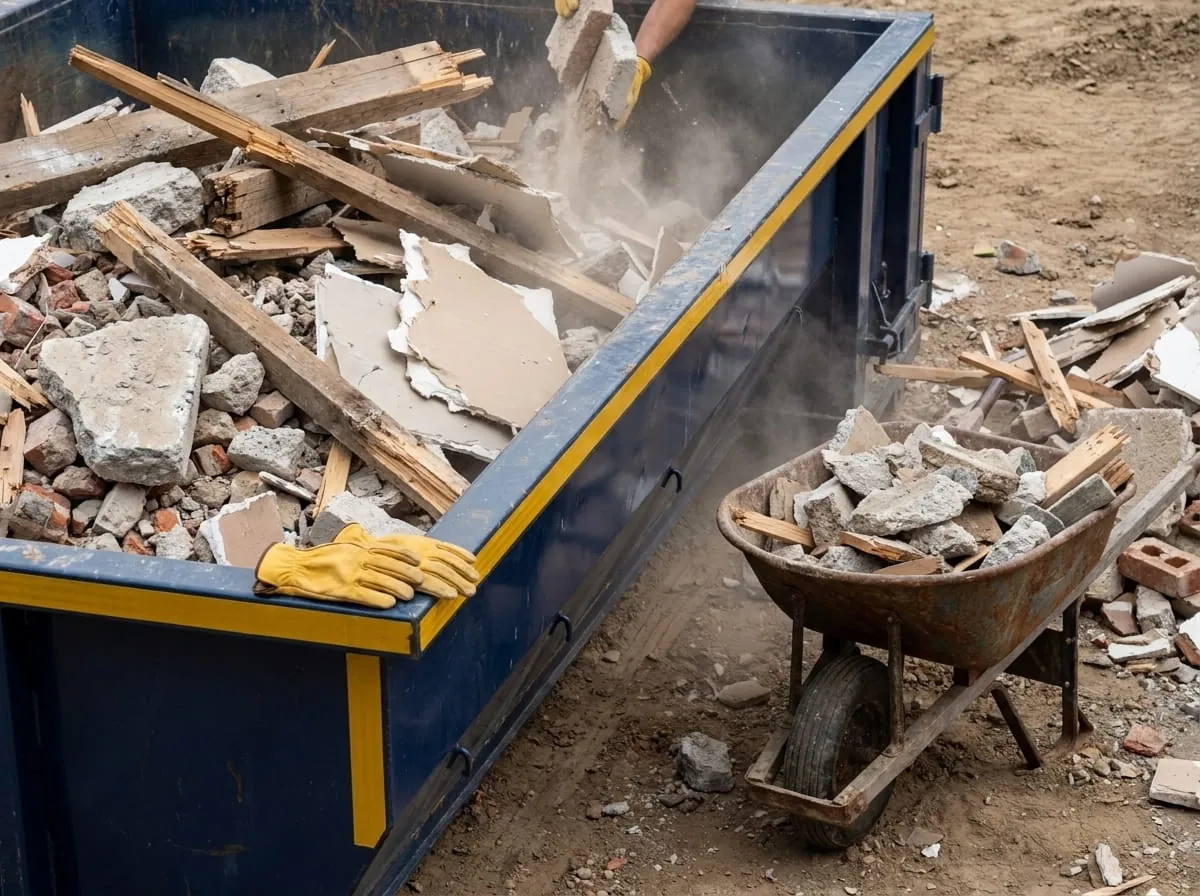
Even after keeping, donating, and selling, an estate cleanout produces far more waste than a curbside trash bin can handle. Decades of worn furniture, ruined carpet, broken appliances, and general debris add up fast, and hauling it yourself in truckloads across town wastes days you do not have. A roll-off dumpster placed right in the driveway lets you work at your own pace and toss as you go, without the strain of loading and unloading a personal truck again and again. Many Sanford families find that having the container on site actually eases the emotional weight, because progress becomes visible and the end of the job finally feels reachable rather than endless.
Sizing matters, and choosing right the first time saves money and second trips. Our 20-yard dumpster is the workhorse for most Sanford estate cleanouts, holding roughly the contents of a mid-sized brick-ranch home without dominating the driveway. Here is a simple guide:
- 10-15 yard: a single cluttered room, a garage, or a smaller apartment.
- 20 yard: a full two- to three-bedroom home, the most common estate cleanout size.
- 30-40 yard: large homes, hoarding situations, or properties with heavy renovation debris.
With flat-rate pricing, you know your cost up front, with no surprise weight fees or hidden charges at the end. That predictability is a relief when you are already managing the financial side of an estate. If you are unsure which size fits, a quick call to (984) 394-2063 will get you a straight answer. You can also learn more about our full estate cleanout services and how we support Lee County families through the whole process.
Finish Strong and Give Yourself Credit
Once the rooms are cleared and the dumpster is hauled away, walk through the empty home one final time. Do a last sweep for anything missed in closets, crawl spaces, and behind appliances. Handle small repairs, a deep clean, and any staging the home needs before it goes to a realtor or new family. Then pause and recognize what you accomplished. Clearing an estate is heavy, meaningful work, and doing it with care honors the person who lived there.
When you are ready to make the physical part simple, we are here to help. Reach out through our contact page or call our friendly Sanford team at (984) 394-2063 to schedule a flat-rate roll-off dumpster and take one big worry off your plate.
Founder, Sanford Dumpster Rental Solutions — sharing straight advice from more than 15 years of local hauling experience.