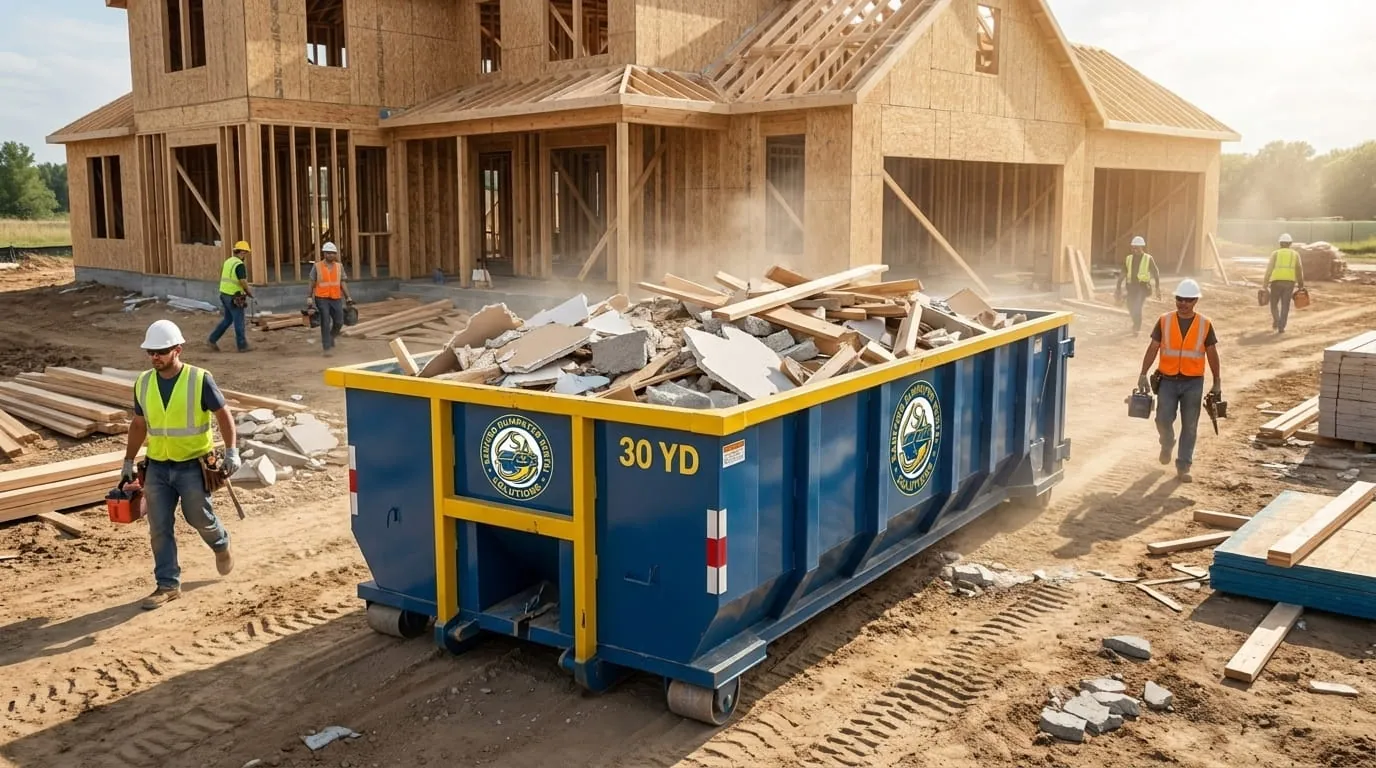
When you order a roll-off for a home cleanout, a roof tear-off, or a kitchen remodel here in Sanford, the dumpster almost always ends up on your driveway. It is the most convenient spot, close to the door and off the road. But a loaded roll-off is one of the heaviest objects that will ever sit on your property, and driveways are not built with that kind of concentrated load in mind. A little planning before the truck arrives is the difference between a smooth rental and a cracked slab, a rust stain, or a gouged apron you notice long after the container is gone.
This guide walks Lee County homeowners through exactly how driveways get damaged, how to protect asphalt and concrete, and what a careful rental company does on its end so you are not left holding the repair bill. None of it is complicated, and most of it costs a few dollars in lumber and ten minutes of prep.
Why a Loaded Roll-Off Is So Hard on a Driveway
The problem is not just total weight, it is weight concentration. A 20-yard container full of shingles or concrete can carry several tons, and all of that load rides on a handful of small contact points: two rear wheels and the front tongue or delivery rails. Each of those points presses down with tremendous force per square inch. That is what causes trouble, because a driveway that easily holds a parked pickup can still be overwhelmed by a load focused onto four small patches.
- Concrete driveways can crack when a point load exceeds what the slab and the soil beneath it can support, especially near unsupported edges or over a soft sub-base.
- Asphalt driveways are more forgiving in cold weather but far more vulnerable in the heat, because asphalt is a flexible material that softens as temperatures climb.
- Both surfaces can be gouged or scraped during delivery and pickup, when steel rails drag as the container is rolled off the truck bed.
- Steel containers left in one spot for days can also leave rust stains, particularly on light or freshly sealed concrete.
Add our Central North Carolina summers to the mix and the risk goes up. Hot, humid Sanford afternoons can push driveway surface temperatures well past the air temperature, and a soft asphalt driveway will take an impression from a heavy wheel the way warm clay takes a fingerprint.
Plywood and Boards: Your Best Line of Defense
The single most effective thing you can do is spread the load. By placing sturdy material under the contact points, you turn a few tiny pressure points into a much larger footprint, dropping the force per square inch to a level your driveway can handle. This one habit prevents the majority of driveway damage we see.
What to put down
- Under the rear wheels: two layers of 3/4-inch plywood, or thick planks, positioned where the tires will land. This is where most of the weight sits once the container is loaded.
- Under the tongue or front rails: a stack of boards or a heavy plywood pad, since the front contact points can dig in hard during roll-off.
- Under the whole footprint if you can: a full sheet of plywood for each wheel path gives the best protection on newer HOA driveways where you want zero marks.
Lay the boards down before the truck arrives and tell the driver where the container should sit. A good driver will work with you to land the wheels on your protection. Do not use thin, brittle, or rotten wood, it will simply crush or snap and give you no benefit. Two-by material and exterior-grade plywood hold up best, and you can reuse the same boards on your next project.
Weight Distribution and Loading Habits That Help
How you fill the container matters as much as what sits under it. A dumpster that is loaded unevenly puts even more stress on one corner of your driveway, and that corner is often the weakest point of the slab.
- Load heavy items low and centered. Concrete, brick, dirt, and shingles should go in first and be spread across the floor rather than piled at one end.
- Keep the load balanced front to back so weight is not stacked over a single wheel or the tongue.
- Do not overfill. Staying within your flat-rate weight allowance protects both your driveway and your wallet, and it keeps the container legal to haul.
Right-sizing the container helps too. For many Sanford cleanouts and remodels a 20-yard dumpster carries plenty without becoming so heavy that it threatens the slab. If you are unsure which size fits your project, our residential dumpster rental page breaks down what each container handles, and it is often smarter to book a size that matches your debris than to cram everything into one overloaded box.
Heat, Rain, and the Central-NC Ground Under Your Driveway
Weather is a bigger factor in Lee County than most people expect. Two local conditions deserve special attention.
Hot-weather asphalt softening
During a humid July or August stretch, asphalt driveways soften noticeably. A roll-off dropped on hot asphalt without protection can leave permanent wheel dents, and rubber tires can even lift the surface when the container is pulled away. If you have asphalt and the forecast is brutal, ask for an early-morning delivery when the surface is coolest, and always put boards down. Freshly sealed or newly paved asphalt is the most vulnerable of all, so give a new driveway extra padding.
Red-clay yards and soggy ground
Sanford sits on the red clay that defines much of the Piedmont. Clay is firm when dry but turns soft and greasy after rain, so a container placed in the yard can sink, rut, and leave deep tracks. If you are considering a yard placement to spare the driveway, wait for dry conditions and lay down plywood or gravel pads under the wheels. On the classic brick-ranch lots around here, a saturated side yard will swallow a wheel fast, and pulling a stuck container out does far more damage than a driveway ever would.
Driveway, Street, or Yard: Choosing the Right Spot
Placement is a trade-off, and the best choice depends on your lot and the season.
- Driveway: most convenient and keeps the container off soft ground. Protect the surface with boards, and mind edges and the apron near the street.
- Street: spares your driveway entirely, but many Sanford neighborhoods and HOAs require a permit or prohibit it. Check the rules before you commit, and never block sightlines or drainage.
- Yard: possible on firm, dry ground with plywood underneath, but risky in red clay after rain. Keep it away from septic lines and irrigation heads.
For newer subdivisions with tidy stamped or broom-finished concrete, the driveway with full plywood protection is usually the safest bet. For older homes with narrow or cracked drives, the street may be worth the permit. When you book, tell us about your surface and we will help you pick the spot that carries the least risk.
How a Careful Company Protects Your Surfaces
Driveway protection is not only on you, it is on the company you hire. The right partner treats your property like it matters.
- Skilled drivers who lower and lift containers slowly to avoid the drag and drop that gouges asphalt and concrete.
- Willingness to place boards and land the wheels exactly where you have set your protection.
- Honest guidance on size and placement so your driveway is never asked to hold more than it should.
- Clear, flat-rate pricing with no surprise weight fees that tempt anyone to overload.
- A local team that understands Sanford driveways, our heat, and our clay soil.
At Sanford Dumpster Rental Solutions we deliver and remove roll-offs with your driveway in mind, and we are always glad to talk through the safest setup before we arrive. A five-minute conversation about your surface and your project can save you a repair you would remember for years.
Ready to book a driveway-safe roll-off in Sanford or Lee County? Call us at (984) 394-2063 for straightforward, flat-rate service, or reach out through our contact page to plan your rental.

Founder, Sanford Dumpster Rental Solutions — sharing straight advice from more than 15 years of local hauling experience.